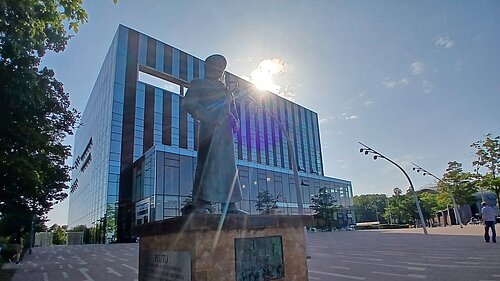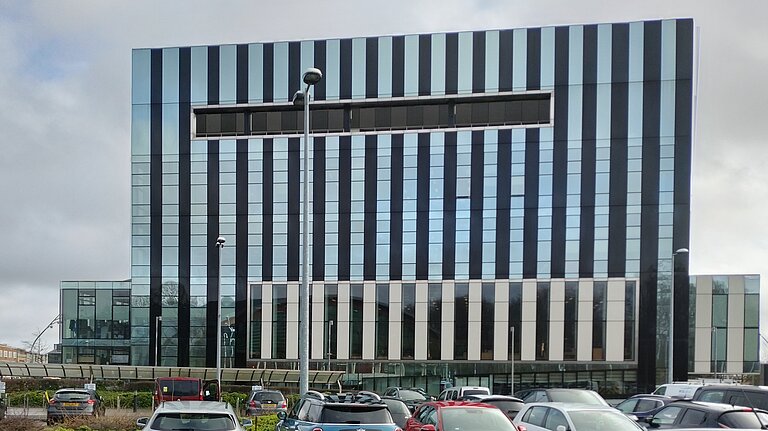
Corby as a Central Actor
2. Corby as a Central Actor
Positive Plan for Corby · Part 2 of 14
A proposal for Corby, made in Corby: The Joint Infrastructure Forum, Neighbourhood Wards, and an annual Infrastructure Watch
- Overview and foreword
- 1. Vision and the Greater Corby Growth Area
- 2. Corby as a Central Actor (you are here)
- 3. Housing and Brownfield Regeneration
- 4. Health: GP, Dental, and Community Services
- 5. Education, including Special Educational Needs
- 6. Roads, Highways and Buses
- 7. Active Travel: Cycling and Walking
Corby is a town approaching 80,000 people, governed from elsewhere. Since the abolition of Corby Borough Council in 2021, strategic decisions about planning, highways, education, and social care have been taken by North Northamptonshire Council, an authority of some 360,000 people whose business is spread across Kettering, Wellingborough, Rushden, and the rural east as well as Corby. NHS services are commissioned across the whole county by the Integrated Care Board; policing decisions rest with the Police, Fire and Crime Commissioner; the railway answers to Network Rail and the Department for Transport. Every one of those bodies has Corby as one interest among many.
This plan does not propose a new tier of government or any reorganisation to fix that. The forums it does propose are light-touch and run by the people who take part in them, and none of them depends on any particular council or body taking the lead. It is a proposal for Corby, and it treats Corby itself, the town, its neighbourhoods, its villages, and the people who live in them as the central actor. What that means in practice is set out below.
2.1 A proposal for Corby, made in Corby
Three things follow from putting the town at the centre.
- One agreed set of asks. The most effective thing Corby can do is speak with one voice: the same priorities, in the same order, pressed by Corby's North Northamptonshire councillors, by the town's MP, by resident and neighbourhood associations, by business, and by the surrounding parish councils, whatever their politics. This plan is our contribution to that shared list. We would rather see its targets adopted by others than kept as party property.
- Evidence from the neighbourhoods up. Corby's case is strongest when it is specific: which streets carry the lorries, which surgeries cannot register patients, which estate has one PCSO shared with three others. This plan is built on that kind of evidence, and Section 2.3 proposes the structure — Neighbourhood Wards — through which it can be gathered and represented routinely rather than campaign by campaign.
- Delivery held to account in public. A plan is only useful if someone checks it. We propose an annual Infrastructure Watch report for Corby, a short, public, plain-English account of what has been delivered against each target in this document, what has slipped, and who is responsible for the next step, published each year and presented to a public meeting in the town (Section 2.4).
2.2 The Greater Corby Joint Infrastructure Forum (GCJIF)
We propose the creation of a standing Joint Infrastructure Forum to give Corby and its neighbouring villages a collective voice on infrastructure that crosses ward and parish boundaries. The Forum would have no statutory power, those remain with North Northamptonshire Council, but would publish agreed positions that NNC, National Highways, the ICB, relevant developers, and Network Rail are expected to respond to in writing.
- Membership: representatives of Corby's North Northamptonshire ward councillors, Town Councillors, Parish Councillors; the local MP; Corby's neighbourhood and resident associations; observers from the NHS Northamptonshire ICB, Network Rail, Northamptonshire Police, and relevant developers.
- Frequency: quarterly, in public, in Corby, with agendas and minutes published.
- A transport sub-group bringing together the transport leads of NNC and each parish council.
- Convened jointly by its members, with North Northamptonshire Council invited to attend as the accountable authority for the Greater Corby Growth Area. Venue and secretariat costs shared between the member councils and met from within existing budgets.
- Outputs: an annual position statement on each of the themes in this plan, fed into NNC's annual budget process and into the new North Northamptonshire Local Plan.
2.3 The case for Neighbourhood Wards
Corby town is represented on North Northamptonshire Council by eleven councillors across four wards — Corby West, Kingswood, Lloyds and Corby Village, and Oakley — following the Local Government Boundary Commission's review, which took effect at the May 2025 elections. Each ward returns two or three councillors and contains, on the Commission's own figures, around 4,000 electors per councillor: roughly 12,000 electors, and something like 15,000 residents, in each three-member ward.
Those wards do not describe how Corby sees itself. Each of them bundles together several neighbourhoods that residents experience as distinct places — estates built in different decades, with different housing, different problems and different community associations — and asks two or three councillors to represent all of them at once.
Corby's neighbourhoods are unusually well defined. The town was built estate by estate, each with its own name, its own centre and, in many cases, its own residents' association: the Old Village, Lloyds, Beanfield, Kingswood, Hazel Leys, Exeter, Lodge Park, Shire Lodge, Tower Hill, Danesholme, Oakley Vale, Great Oakley, Priors Hall, Weldon Park, and the industrial estates between them. People say where they are from at that level, not at ward level. Policing, health, schools and community funding, the Pride in Place programme for Kingswood and Hazel Leys is the current example, already work at that level. Representation should too.
We therefore propose Neighbourhood Wards: a further electoral review of Corby's North Northamptonshire wards to create smaller wards, each electing one or two councillors and each drawn to match a recognisable neighbourhood or pair of neighbourhoods rather than a slice of the town's electorate. The number of councillors for Corby need not change; the number of wards would. The Local Government Boundary Commission for England can conduct a further electoral review, and North Northamptonshire Council can request one. The principle is already conceded locally: the Council's own 2026 Community Governance Review proposes nine wards for Corby town in place of four, in recognition that four does not reflect how Corby's communities see themselves. We want the same logic applied at the unitary tier, where the powers and the budgets sit.
Neighbourhood Wards would give Corby:
- A named councillor for every neighbourhood, known to residents and answerable to them, rather than a shared pool for a quarter of the town.
- A ready-made unit for the rest of this plan: a named PCSO for each neighbourhood in the ward (Section 12.2), health and school consultation, the neighbourhood-level evidence in the Infrastructure Watch report, and resident input into how Community Infrastructure Levy and Section 106 money is spent locally.
- Fairer campaigning and turnout. Smaller wards are cheaper to contest and easier to canvass, which lowers the barrier for independents and community candidates and tends to bring elections closer to residents.
- A stronger Corby voice within North Northamptonshire, because eleven councillors each rooted in a specific, identifiable community are harder to overlook than eleven councillors representing four large areas.
We are clear about limits. Ward boundaries are a matter for the Boundary Commission, which applies statutory tests of electoral equality, community identity and effective governance, and any review takes two to three years. Our ask is that Corby's case for Neighbourhood Wards is put formally, by North Northamptonshire Council, with the Joint Infrastructure Forum's backing, so that the next review of the town's wards starts from Corby's neighbourhoods rather than from the map as it stands.
2.4 Infrastructure Watch
The annual Infrastructure Watch report proposed in Section 2.1 is the single accountability mechanism in this plan, and it should be simple. For each target in this document, it would record: the target; the responsible body; what was delivered in the year; the status (on track, slipped, at risk, abandoned); and the next milestone. It would be published in plain English each autumn, presented at a public meeting in Corby, and sent to everybody named in it with a request for a written response. Where a neighbourhood is affected, the report would say so by name. Anyone can produce it like a council, a community group, or Corby Liberal Democrats ourselves and we commit to producing the first one if nobody else does.
Follow Corby Lib Dems
We're sharing the plan one part at a time on social media. Follow Corby Liberal Democrats to see each film and tell us what you think.
Facebook · Instagram · Bluesky · Threads · TikTok · LinkedIn · YouTube
Share this part: Facebook · LinkedIn · Bluesky
Want to talk it through? Call Alex Lock on 07794 221431 or message him on WhatsApp.
Want to get involved or have your say? See how to engage with the plan.
Sign up
for email updates