12. Community Safety
Positive Plan for Corby · Part 12 of 14
A permanent, accessible police station for Corby; a named, dedicated PCSO for every neighbourhood
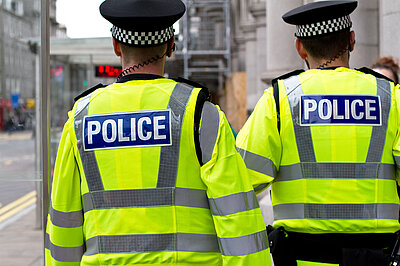
Corby is a town approaching 80,000 people with no police station. That is not a reflection of how safe the town is; it is a reflection of decisions taken elsewhere. This section sets out what we want restored and what we want built, in the order we intend to campaign for it.
We are clear at the outset about where the power sits. Policing decisions rest with the Police, Fire and Crime Commissioner and the Chief Constable, not with North Northamptonshire Council, and not with any body in Corby. Neither this plan nor any council can build a police station. What Corby can do is make the case, supply the local evidence through the Joint Infrastructure Forum (Section 2.2), and keep the commitment visible until the doors open. That is a real role, and on the police station it has already moved the argument a long way.
12.1 First priority: a permanent police station for Corby
A police station for Corby is the single most achievable commitment in this section, because the argument has already been won in principle. The Police, Fire and Crime Commissioner and the Chief Constable committed publicly in 2025 to reopening a base in the town. What has not happened is delivery. That is where our effort goes.
Corby has been without a police station since the Elizabeth Street station closed in 2017; the building was sold in 2023 for £1 million and stands empty. Since then the only in-person police provision in a town approaching 80,000 people has been enquiry desks on an upper floor of the Corby Cube, open office hours on weekdays, while response officers attend 999 calls from the Northern Accommodation Building on the outskirts of Kettering.
What Corby is asking for is simple to describe. It is a permanent, physical place in the town where any resident can walk in and report a crime, speak to an officer, and be seen — at street level, on a route people already use, open at hours that include evenings and weekends, and with a public front desk that is staffed rather than a screen. It is a building people can point to. A station that exists on paper, or on an upper floor of a council building, does not meet that test.
- A permanent, town-centre police station for Corby, at street level with easy public access, a staffed front desk, accommodation for the neighbourhood policing team and its named PCSOs (Section 12.2), and — critically — a dedicated response unit based in the town rather than in Kettering.
- Opening hours that fit the town: a front desk open daily, including at least one evening session and weekend opening, with a published timetable.
- Accessible in every sense: step-free, close to the bus station and the town centre, well signed, and with a private space for reporting sensitive matters.
- A published timetable and site shortlist from the Office of the Police, Fire and Crime Commissioner, with progress reported to a public meeting in Corby.
- Interim improvement in the meantime: extended opening hours at the Corby Cube enquiry desks, including at least one evening and one weekend session, and clearer signage so residents know the facility exists.
- Corby's councillors and MP to help with the site search, including reviewing publicly held assets and empty town centre premises for suitability, rather than leaving the search entirely to property agents. By early 2026 more than twenty sites had been considered and rejected, and the town's MP has said that a shared public building such as the Cube is not the answer. We agree.
Our position is straightforward: the commitment is welcome, the delay is not, and a commitment without a building is not a police station. We will keep pressing until it opens, and we will judge the outcome by three tests — can a resident walk in off the street and report a crime; is there a dedicated response unit based in Corby; and is there a named officer for every neighbourhood.
12.2 A named, dedicated PCSO for every neighbourhood
A building matters because of who works from it. Corby's second campaign is for neighbourhood policing that residents can see and name.
Police Community Support Officers are the visible, everyday face of policing: the people who know the estate, the shopkeepers, the young people and the trouble spots, who are at the community meeting and who are recognised in the street. Corby does not have enough of them, and those it has are spread too thin. At the time of writing a single PCSO covers Beanfield, Tower Hill, Shire Lodge and Lodge Park between them, and another covers Kingswood, Exeter and Hazel Leys. Residents in those neighbourhoods cannot name their officer because, in practice, they do not have one.
The Government's Neighbourhood Policing Guarantee, announced in April 2025, commits every neighbourhood in England to named, contactable officers, backed by an additional 13,000 neighbourhood officers, PCSOs and special constables nationally. Corby's ask is that the guarantee means what it says here.
We propose a campaign for dedicated, named PCSOs for Corby's neighbourhoods:
- One named PCSO for each neighbourhood. Where a Neighbourhood Ward (Section 2.3) covers a pair of neighbourhoods, each keeps its own named PCSO.
- Dedicated means dedicated: the officer's beat is the neighbourhood, not a rota covering half the town, and they are not routinely abstracted to other duties.
- Named and contactable: the officer's name, photograph and direct contact details published for every neighbourhood — on the police website, at the police station, in community centres and through the neighbourhood's own channels — with a published schedule of surgeries and a response standard for non-urgent contact.
- Rooted in the neighbourhood: a standing invitation to residents' association meetings, schools and community events, and a monthly public update on priorities and results for each neighbourhood.
- Backed by Corby's share of the national uplift: a published figure from Northamptonshire Police for the number of neighbourhood officers and PCSOs allocated to Corby under the Neighbourhood Policing Guarantee, and a timetable for filling the posts.
- Continuity: PCSOs kept in post in a neighbourhood for a minimum term wherever possible, because a named officer who changes every six months is not known to anyone.
Corby's part of the bargain is to make the neighbourhoods easy to police well: residents' associations that meet, community venues that host surgeries, and Neighbourhood Wards that give each officer a councillor to work with.
12.3 Other community safety goals
Buildings and officers are not the whole of community safety. The following remain priorities alongside them, and several are the things residents raise most often:
- Multi-year funded youth services in every neighbourhood, working with Corby's strong tradition of community sport, building on the existing PCC-funded youth workers in Kingswood.
- Anti-loneliness strategy targeted at older residents.
- Continued support for the neighbourhood and resident associations — including COVNA, East Lloyds Community Association and the BNA, and other residents' associations as they form — as the bodies through which community safety concerns are most reliably raised and evidenced.
- Better lighting, CCTV where residents want it, and design against crime built into every new development and public realm scheme in this plan.
12.4 What Corby will press for
- The Corby police station campaign kept up until the doors open, with publicly held assets and empty premises offered for the site search, and a public progress meeting with the Office of the Police, Fire and Crime Commissioner at least annually.
- Northamptonshire Police to publish Corby's allocation of named PCSOs and neighbourhood officers, neighbourhood by neighbourhood, and to report against it.
- Extended opening hours and clearer signage at the Corby Cube police enquiry desks as an interim measure.
- An annual community safety meeting bringing together Northamptonshire Police, Northamptonshire Fire and Rescue Service, NNC community safety officers, and the neighbourhood associations.
- Neighbourhood evidence — speeding hotspots, anti-social behaviour patterns, and PCSO coverage — fed into the Police, Fire and Crime Commissioner's public consultations and reported in Infrastructure Watch.
- An Anti-Loneliness Programme run through ward councillors and community grants.
- A properly funded youth service.
Follow Corby Lib Dems
We're sharing the plan one part at a time on social media. Follow Corby Liberal Democrats to see each film and tell us what you think.
Facebook · Instagram · Bluesky · Threads · TikTok · LinkedIn · YouTube
Want to talk it through? Call Alex Lock on 07794 221431 or message him on WhatsApp.
Want to get involved or have your say? See how to engage with the plan.
Sign up
for email updates